










 By
By 
A varicocele is a set of dilated veins in the scrotum, it is present in about one man in seven, and it is the most common correctable cause of male infertility. It is also routinely oversold. Repair reliably improves semen parameters; whether it produces more babies is a genuinely open question, and the honest version of this subject holds both of those facts at once.
See a doctor soon if you notice a lump, heaviness, or swelling in one testicle alongside low semen volume – this combination needs a direct exam, not just an online explanation.
See a doctor if low volume or fertility concerns persist for more than a few months, especially if you and a partner are actively trying to conceive.
A routine visit is fine to raise an isolated, occasional change in volume with no other symptoms.
Who to see: a primary care doctor can order an initial semen analysis and bloodwork; a urologist specializing in male fertility is the next step if results are abnormal or a varicocele is suspected.
Worth asking: whether a formal semen analysis is warranted rather than relying on self-observation, since volume alone does not reliably indicate fertility.
Varicoceles occur in about 15 percent of men generally and 35 to 44 percent of men with primary infertility. Roughly 85 to 90 percent are left-sided, for a specific anatomical reason. After repair, semen parameters improve substantially and consistently. Pregnancy rates probably improve, from around 21 percent to somewhere between 22 and 48 percent, on low-certainty evidence from 13 trials. Live birth remains unproven. Microsurgical repair has a recurrence rate of 0.4 percent against 15 to 29 percent for the open retroperitoneal approach, which is the single most consequential choice a man makes here.
| Prevalence in men generally | About 15% |
|---|---|
| In men with primary infertility | 35% to 44% |
| In men with secondary infertility | 45% to 81% |
| Left-sided on examination | 85% to 90% |
| Ultrasound threshold | Vein above 3 mm standing during Valsalva, reflux over 2 seconds |
| Effect of repair on pregnancy | RR 1.55 (1.06 to 2.26), low certainty, 13 trials |
| Effect on live birth | RR 2.27 (0.19 to 26.93), very low certainty, no usable evidence |
| Microsurgical recurrence rate | 0.4% |
| Open retroperitoneal recurrence rate | 15% to 29% |
| Microsurgical hydrocele rate | 0.44%, vs up to 43% laparoscopic |
| Testosterone rise in hypogonadal men | About +123 ng/dL; no significant change in eugonadal men |
What is a varicocele?
The pampiniform plexus is a network of small veins draining the testicle. When the valves in that system fail, blood pools and the veins dilate, in much the same way varicose veins form in the leg. The result is a varicocele. A varicocele is only one cause of a scrotal swelling; which testicular lumps are worth checking is covered separately.
| Population | Prevalence |
|---|---|
| Men generally | About 15% |
| Men with an abnormal semen analysis | About 25% |
| Men with primary infertility | 35% to 44% |
| Men with secondary infertility | 45% to 81% |
Secondary infertility here means a man who has previously fathered a child and is now unable to. The high prevalence in that group is the strongest circumstantial evidence that varicoceles cause progressive damage over time rather than being incidental.
The corollary is worth stating plainly because it cuts the other way: most men with a varicocele are fertile. Only about 20 percent of men with a documented varicocele have fertility difficulties. Finding one on an examination does not, on its own, explain anything.
The figure usually quoted for secondary infertility is “70 to 80 percent”. We went back to the primary source, Gorelick and Goldstein’s 1993 study of 1,099 infertile men, and it reports 81 percent (79 of 98 men). The European Association of Urology gives a range of 45 to 81 percent. Neither supports “70 to 80” as a stated range, which appears to be a rounding of the single highest figure into a band that no source actually reports. We have used the guideline range above. We are writing to the secondary sources carrying the narrower figure.
Why are varicoceles almost always on the left?
On clinical examination, roughly 85 to 90 percent of varicoceles are left-sided, about 10 percent are bilateral, and isolated right-sided varicoceles are well under 1 percent.
The reason is plumbing. The left internal spermatic vein ascends and drains into the left renal vein, joining it at approximately a right angle. The right internal spermatic vein drains directly and obliquely into the inferior vena cava, a lower-pressure vessel, at a shallower angle. The left venous column is also longer, so it transmits a greater hydrostatic pressure downward. There is a further contribution from the nutcracker phenomenon, in which the left renal vein is compressed between the superior mesenteric artery and the aorta, raising pressure upstream.
Two refinements matter. First, systematic imaging finds bilateral involvement far more often than examination does, in anywhere from about a third to the large majority of cases depending on the modality. A varicocele that feels left-sided is frequently bilateral on ultrasound.
Second, the received wisdom about isolated right varicoceles deserves qualifying. The teaching is that a right-sided varicocele in isolation should prompt a search for a retroperitoneal mass obstructing venous drainage, and that remains sound advice, particularly for a new-onset varicocele that does not decompress when lying down, or one in an older man. But the malignancy yield is lower than the folklore implies. In a series of patients with right-sided varicocele on ultrasound, non-malignant causes explained 29.1 percent, and malignancy was found in 3.6 percent, in both cases alongside other signs of metastatic disease. It is a reason for a scan, not a reason to panic.
Related: Improving sperm health naturally · All semen and fertility articles
How is a varicocele graded?
The grading system is purely clinical and takes about fifteen seconds to apply.
| Grade | Finding |
|---|---|
| Subclinical | Not palpable or visible; detected only on Doppler ultrasound |
| Grade 1 | Palpable only during a Valsalva manoeuvre |
| Grade 2 | Palpable at rest, not visible |
| Grade 3 | Visible and palpable at rest |
On ultrasound, the accepted thresholds for a clinically significant varicocele are a maximum venous diameter above 3 mm measured standing during Valsalva, together with venous reflux lasting more than two seconds.
The distinction between clinical and subclinical is not academic. It determines whether anyone should operate, and both major guidelines are unusually blunt about it. The AUA and ASRM make it a strong recommendation that clinicians should not recommend varicocelectomy for men with non-palpable varicoceles detected solely by imaging. The European guideline says the same. A systematic review found no demonstrable pregnancy benefit or meaningful semen improvement from treating subclinical varicoceles.
How does a varicocele damage sperm?
Four mechanisms are proposed, and they are not mutually exclusive: raised testicular temperature, hypoxia from venous stasis, reflux of metabolites from the renal and adrenal veins, and oxidative stress causing sperm DNA damage.
The temperature evidence is the most concrete. In a study of 119 men, testicular surface temperature on the affected side averaged around 34.0 to 34.4 degrees Celsius against roughly 32.9 to 33.0 in controls, a difference of a little over one degree. After varicocelectomy, temperatures fell to match the control range.
The DNA evidence is more recent and arguably more important, because it explains outcomes that conventional semen parameters do not. Men with varicocele have a sperm DNA fragmentation index a mean of 15.34 points higher than controls (95% CI 9.74 to 20.9). After repair, fragmentation falls by a mean of 6.86 points (minus 10.04 to minus 3.69), with improvement measurable within three months.
This is why the European guideline carries a specific recommendation, graded weak, that varicocelectomy may be considered in men with raised DNA fragmentation and otherwise unexplained infertility, or after failed assisted reproduction. Standard semen parameters can look acceptable while fragmentation is high, and fragmentation is what predicts miscarriage and failed fertilisation.
Does varicocele repair actually work?
This splits into two questions with two different answers.
Semen parameters: yes, clearly. The largest analysis pooled 351 articles and found large standardised improvements after repair across sperm concentration (SMD 1.590), total sperm count (1.824), progressive motility (1.845) and total motility (1.613). In absolute terms, a smaller analysis of 289 patients found sperm concentration rose by 9.59 million per mL, progressive motility by 8.66 percentage points, and normal morphology by 2.73 percentage points.
One methodological caveat applies to all of it. These are before-and-after comparisons, which cannot separate a treatment effect from regression to the mean. Men are selected for surgery when their parameters are poor, and poor measurements tend to be followed by better ones regardless of what happens in between.
Pregnancy and live birth: much less certain. A Cochrane review pooled 48 randomised trials and 5,384 men.
| Outcome | Result | Evidence base | Certainty |
|---|---|---|---|
| Pregnancy | RR 1.55 (1.06 to 2.26) | 13 trials, 1,193 men | Low |
| Live birth | RR 2.27 (0.19 to 26.93) | 2 trials, 204 men | Very low |
The live birth confidence interval spans from a 5-fold reduction to a 27-fold increase. That is not weak evidence of benefit; it is an absence of usable evidence, and it should be read that way rather than as a promising signal.
The pregnancy result is real but modest, and Cochrane’s own framing is useful: couples with no treatment or delayed treatment had roughly a 21 percent chance of pregnancy, against 22 to 48 percent after treatment. That range is wide because the trials disagree.
Both guideline bodies land in the same place. The AUA and ASRM say clinicians should consider surgical varicocelectomy in men attempting to conceive who have a palpable varicocele, infertility and abnormal semen parameters, excluding azoospermic men, at a moderate recommendation. The European guideline makes it a strong recommendation to treat infertile men with a clinical varicocele, abnormal semen parameters and otherwise unexplained infertility, and an equally strong recommendation not to treat men whose semen analysis is normal.
Which gives the practical filter: palpable varicocele, abnormal semen analysis, and infertility. All three. Any two of the three is not the indication.
Which varicocele operation is best?
This is where the largest, most avoidable differences in outcome sit, and it is the question most worth asking a surgeon directly.
| Technique | Recurrence | Hydrocele |
|---|---|---|
| Microsurgical inguinal or subinguinal | 0.4% | 0.44% |
| Laparoscopic | 3% to 6% | 7% to 43% |
| Open inguinal | 2.6% to 13% | 7.3% |
| Open retroperitoneal high ligation | 15% to 29% | 5% to 10% |
| Retrograde embolisation | 3% to 11% | 10% |
| Antegrade sclerotherapy | 5% to 9% | 5.5% |
The microsurgical row is not a rounding difference. A recurrence rate of 0.4 percent against 15 to 29 percent, and a hydrocele rate of 0.44 percent against up to 43 percent, is the difference between one operation and the possibility of a second. The reason is optical: magnification allows the surgeon to identify and preserve the testicular artery and the lymphatic vessels, and it is lymphatic injury that produces hydrocele.
The European guideline states that microsurgical varicocelectomy is the most effective technique, with fewer complications and lower recurrence, while noting it requires specialised training. Randomised evidence agrees: microscopic subinguinal surgery beat other surgical approaches on pregnancy (RR 1.18, 1.02 to 1.36) and on recurrence (RR 0.48, 0.29 to 0.79), both at moderate certainty. Surgery against radiological embolisation showed no clear difference (RR 1.13, 0.75 to 1.70), at low certainty.
What about testosterone, pain and teenagers?
Testosterone. Repair raises testosterone in men who are hypogonadal and does essentially nothing in men who are not. Pooled across studies, mean testosterone rose by 34.3 ng/dL overall. In the hypogonadal subgroup it rose by 123 ng/dL, and against untreated controls the difference was 105.65 ng/dL. In eugonadal men there was no significant difference from control, at p = 0.36. Note also that the AUA and ASRM guideline contains no statement recommending varicocelectomy for testosterone, which is worth knowing if it is being offered to you on that basis.
Pain. A minority of varicoceles hurt, typically as a dull ache that worsens through the day and eases on lying down. Outcomes after repair done specifically for pain are good: 86 percent complete resolution in one series, 83.3 percent in a more recent series of 132 men. The predictors are informative. Dull pain resolved far better than dragging pain (OR 5.73) or sharp pain (OR 8.72), subinguinal approaches beat high ligation (OR 2.73), and microsurgical beat laparoscopic (OR 7.12). Grade of varicocele made no significant difference to pain outcome.
Adolescents. The trigger for intervention is not the varicocele but the testicle. The European guideline makes it a strong recommendation to offer surgery in adolescents when a varicocele is associated with a persistently small testis, defined as a difference of more than 2 mL or 20 percent. Catch-up growth after repair occurred in an average of 76.4 percent of boys across 14 studies and 1,475 patients, with better results in boys under 14.
Common questions about varicocele
Does varicocele repair improve fertility?
It splits into two answers. Semen parameters improve reliably and substantially across a large literature. Pregnancy probably improves, at a relative risk of 1.55 on low-certainty evidence from 13 trials, roughly 21 percent untreated against 22 to 48 percent treated. Live birth remains unproven, with a confidence interval so wide it constitutes an absence of evidence rather than a signal.
Who should have a varicocele repaired?
The filter is three things together: a palpable varicocele, an abnormal semen analysis, and infertility. Any two of the three is not the indication. Both the AUA and the EAU make it a strong recommendation not to operate on varicoceles found only on imaging, because a systematic review found no pregnancy benefit from treating subclinical ones.
Why are varicoceles on the left side?
Plumbing. The left internal spermatic vein drains into the left renal vein at approximately a right angle, while the right drains directly and obliquely into the lower-pressure inferior vena cava. The left column is also longer, transmitting more hydrostatic pressure downward.
Which varicocele surgery is best?
Microsurgical subinguinal, by a wide margin, and this is the most consequential question to ask a surgeon. Its recurrence rate is 0.4 percent against 15 to 29 percent for open retroperitoneal ligation, and its hydrocele rate is 0.44 percent against up to 43 percent for laparoscopic. Magnification lets the surgeon preserve the artery and lymphatics.
Does varicocele repair increase testosterone?
In men who are hypogonadal, yes, by roughly 105 to 123 ng/dL. In men with normal testosterone, there was no significant difference from control. Note also that the AUA and ASRM guideline contains no statement recommending repair for testosterone, which is worth knowing if it is being offered to you on that basis.
Sources
- European Association of Urology. Guidelines on Sexual and Reproductive Health: Male Infertility. EAU
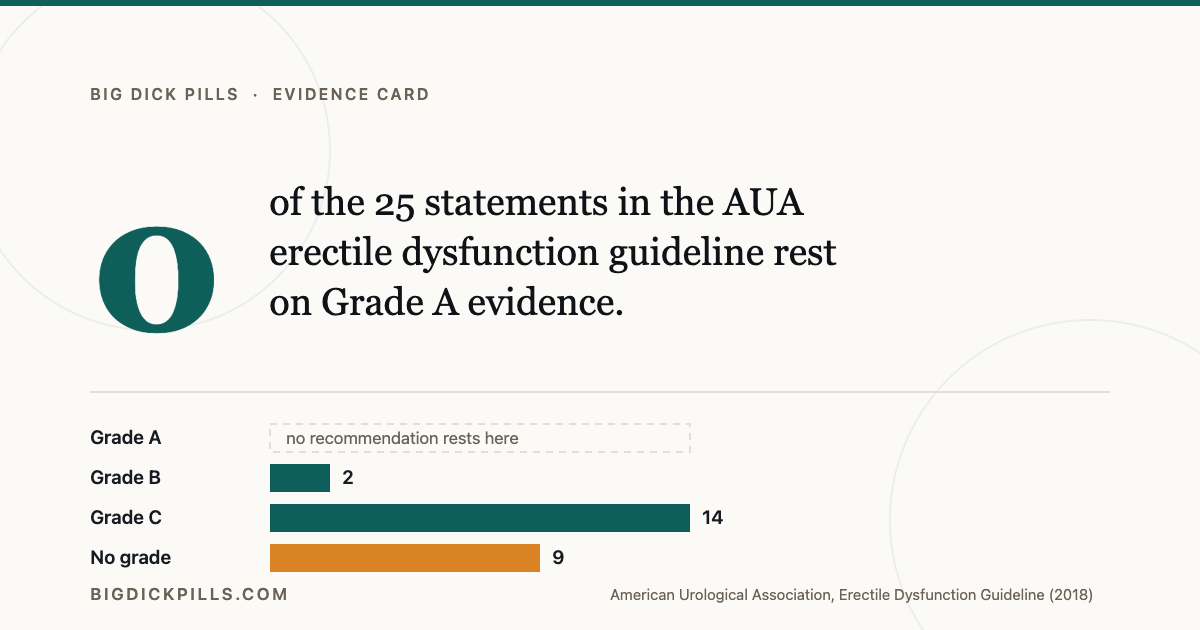
- American Urological Association and American Society for Reproductive Medicine. Diagnosis and Treatment of Infertility in Men: AUA/ASRM Guideline. AUA
- Persad E, O’Loughlin CA, Kaur S, et al. Surgical or radiological treatment for varicoceles in subfertile men. Cochrane Database of Systematic Reviews. 2021;4:CD000479. Full text
- Gorelick JI, Goldstein M. Loss of fertility in men with varicocele. Fertility and Sterility. 1993;59(3):613-616. PubMed
- Cannarella R, Shah R, Hamoda TAA, et al. Does varicocele repair improve conventional semen parameters? A meta-analytic study of before-after data. The World Journal of Men’s Health. 2024;42(1):92-132. PubMed
- Birowo P, Wijaya JR, Atmoko W, Rasyid N. The effects of varicocelectomy on the DNA fragmentation index and other sperm parameters: a meta-analysis. Basic and Clinical Andrology. 2020;30:15. Full text
- Palani A, Cayan S, Cannarella R, et al. Sperm DNA fragmentation in men with varicocele: a systematic review and meta-analysis. The World Journal of Men’s Health. 2026;44(2):268-289. PubMed
- Wright EJ, Young GP, Goldstein M. Reduction in testicular temperature after varicocelectomy in infertile men. Urology. 1997;50(2):257-259. PubMed
- Chen X, Yang D, Lin G, et al. Efficacy of varicocelectomy in the treatment of hypogonadism in subfertile males with clinical varicocele: a meta-analysis. Andrologia. 2017;49(10). PubMed
- Whelan P, Levine L. Effects of varicocelectomy on serum testosterone. Translational Andrology and Urology. 2016;5(6):866-876. Full text
- Kaltsas A, Koumenis A, Symeonidis EN, et al. Is varicocele truly unilateral? Contralateral involvement and bilateral testicular effects in male infertility. Journal of Personalized Medicine. 2026;16(8):417. Full text
- Gleason A, Bishop K, Xi Y, Fetzer DT. Isolated right-sided varicocele: is further workup necessary? AJR American Journal of Roentgenology. 2019;212(4):802-807. PubMed
- Li F, Yue H, Yamaguchi K, et al. Effect of varicocelectomy on testicular volume in children and adolescents: a meta-analysis. Urology. 2012;79(6):1340-1345. PubMed
- Park JH, Pak K, Park NC, Park HJ. How can we predict a successful outcome after varicocelectomy in painful varicocele patients? An updated meta-analysis. The World Journal of Men’s Health. 2021;39(4):645-653. PubMed
- Al-Gadheeb A, El-Tholoth HS, Albalawi A, et al. Microscopic subinguinal varicocelectomy for testicular pain. Basic and Clinical Andrology. 2021;31:1. Full text
This article is for information only and is not medical advice. Varicocele repair is a surgical decision that depends on your semen analysis, your partner’s fertility assessment and your own priorities. Talk to a urologist about your own situation.
Cite this page: Big Dick Pills, “Varicocele: The Most Common Correctable Cause of Male Infertility”, bigdickpills.com/low-semen-volume/varicocele/ (updated ).
Source links on this site are checked every month; last check . How sources are checked.